
Hello world!
Welcome to WordPress. This is your first post. Edit or delete it, then start writing!
Read More →
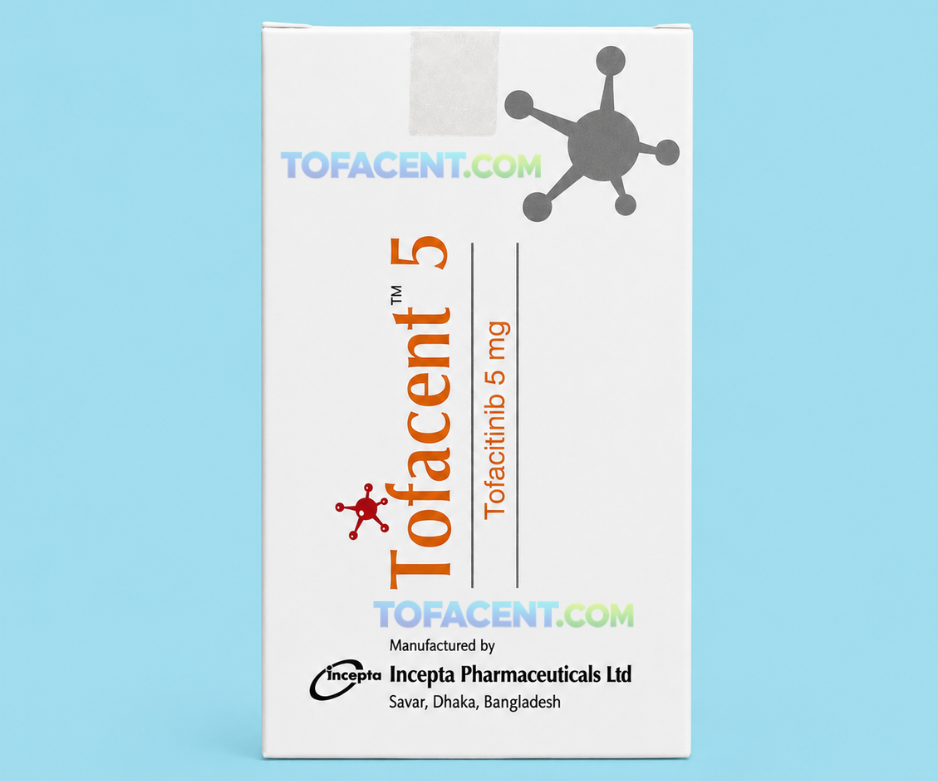
Tofacent 5 mg is identified on this website as a product containing tofacitinib 5 mg, an orally administered small-molecule Janus kinase (JAK) inhibitor. The specific manufacturer, marketing authorization holder, manufacturing site, formulation, packaging, country-specific registration and regulatory status of the Tofacent-branded product should be verified against the actual product packaging and official product documentation before publication.
Tofacitinib is an immunomodulatory medicine that inhibits JAK-dependent intracellular signaling involved in inflammatory and immune responses. The established U.S. reference product is XELJANZ, developed by Pfizer. Pfizer states that its scientists discovered and developed XELJANZ/tofacitinib, and the U.S. Food and Drug Administration granted the original approval in 2012.
The supplied website material should therefore distinguish clearly between Tofacent as the specific branded product and tofacitinib as the active pharmaceutical ingredient. Tofacent should not automatically be described as identical to XELJANZ without product-specific evidence.
Incepta Pharmaceuticals Ltd. is a leading pharmaceutical manufacturer in Bangladesh, established in 1999. The company develops and manufactures a wide range of pharmaceutical products for the domestic and international markets. Its major manufacturing facilities are located in Savar and Dhamrai, Bangladesh.
Incepta manufactures different dosage forms, including tablets, capsules, oral liquids, injections, eye drops, creams, ointments, gels, nasal sprays, prefilled syringes, lyophilized injections, and biological products. The company also focuses on technologically advanced dosage forms and pharmaceutical research and development.
Address: Incepta Pharmaceuticals Ltd. 40 Shahid Tajuddin Ahmed Sarani, Tejgaon I/A, Dhaka-1208, Bangladesh
Tofacent 5 mg is identified for this website as a tofacitinib-containing product. Tofacitinib is a targeted immunomodulatory medicine belonging to the JAK inhibitor class.
JAK enzymes participate in signaling pathways used by numerous cytokines and growth factors. By inhibiting JAK signaling, tofacitinib reduces signaling involved in inflammatory and immune-system activity.
The specific clinical use of a Tofacent product must be determined from its applicable regulatory authorization and prescribing information. The presence of tofacitinib as an active ingredient does not by itself establish that every indication approved for XELJANZ is authorized for Tofacent in every country.
Tofacitinib is a small-molecule Janus kinase inhibitor. Unlike biologic medicines that generally act outside cells or bind extracellular targets, tofacitinib works on intracellular signaling pathways.
Pfizer developed tofacitinib as CP-690,550 and subsequently developed it as XELJANZ. Pfizer’s historical materials describe XELJANZ as the first approved rheumatoid arthritis treatment in the JAK-inhibitor class.
The original U.S. approval of XELJANZ was for adults with moderately to severely active rheumatoid arthritis who had an inadequate response or intolerance to methotrexate.
Current U.S. labeling has subsequently expanded to include additional immune-mediated conditions.
Pfizer discovered and developed tofacitinib. Pfizer’s announcement concerning the 2012 FDA approval specifically states that the discovery and development of XELJANZ were carried out by Pfizer scientists.
The medicine was developed under the research code CP-690,550 before becoming associated with the commercial brand XELJANZ.
The established U.S. reference brand is:
XELJANZ® (tofacitinib)
XELJANZ received its initial U.S. approval in November 2012. The original FDA label records an initial U.S. approval of 2012.
Pfizer was the company responsible for the original development and commercialization of XELJANZ. The original FDA label identifies Pfizer’s U.S. organization in the product information and states that the product was distributed by Pfizer Labs, Division of Pfizer Inc.
For website wording, it is preferable to state:
Tofacitinib was discovered and developed by Pfizer, and the original reference medicine was XELJANZ. The specific manufacturing entity and manufacturing site associated with the original commercial product should be described according to the applicable historical regulatory documentation rather than assumed solely from the Pfizer brand name.
This distinction is important because originator/developer, manufacturer, marketing authorization holder, brand owner and distributor are not necessarily the same legal entity.
Tofacent and XELJANZ should not automatically be described as identical products merely because both are identified as containing tofacitinib.
They may differ in:
The active pharmaceutical ingredient may be the same, but product-specific equivalence and authorization should be established through appropriate regulatory and pharmaceutical documentation.
Tofacitinib inhibits Janus kinase enzymes, which are intracellular enzymes involved in signaling from multiple cytokine receptors.
The JAK family includes:
Tofacitinib has particular activity against JAK1 and JAK3 and, to a lesser extent, JAK2. The resulting reduction in cytokine signaling can decrease inflammatory and immune-system activity.
In simple terms, tofacitinib works by interfering with intracellular communication signals that immune cells use to produce and maintain inflammation.
This mechanism can help reduce inflammatory activity in selected immune-mediated diseases, but the same immunomodulatory effect can also increase susceptibility to infections and contribute to other clinically important risks.
Approved uses depend on the product, formulation, patient population and regulatory jurisdiction.
Current U.S. labeling for tofacitinib tablets includes adult patients with:
The current U.S. labeling also includes certain pediatric patients aged 2 years and older with active psoriatic arthritis or polyarticular-course juvenile idiopathic arthritis.
The applicable indication generally involves patients who have had an inadequate response or intolerance to one or more TNF blockers under current U.S. labeling.
These indications should not automatically be presented as approved indications for Tofacent.
The authorization of a specific Tofacent product must be confirmed through its applicable national or regional regulatory documentation.
Tofacitinib is used in selected adults with moderately to severely active rheumatoid arthritis.
Rheumatoid arthritis is a chronic inflammatory autoimmune disease in which abnormal immune activity contributes to inflammation of the joints and can cause progressive structural damage.
The original U.S. XELJANZ approval in 2012 was for adults with moderately to severely active rheumatoid arthritis who had an inadequate response or intolerance to methotrexate.
Current U.S. labeling contains updated requirements concerning previous treatment and TNF-blocker response.
Tofacitinib is also authorized in the United States for selected adults with active psoriatic arthritis who have had an inadequate response or intolerance to one or more TNF blockers.
Psoriatic arthritis is an inflammatory arthritis associated with psoriasis and can affect peripheral joints, the spine, entheses and other structures.
Current U.S. labeling includes tofacitinib for selected adults with active ankylosing spondylitis who have had an inadequate response or intolerance to one or more TNF blockers.
Ankylosing spondylitis is a chronic inflammatory disease that primarily affects the axial skeleton and can cause pain and stiffness.
Tofacitinib is also used in selected adults with moderately to severely active ulcerative colitis who have had an inadequate response or intolerance to one or more TNF blockers under current U.S. labeling.
Ulcerative colitis is an inflammatory bowel disease affecting the lining of the colon and rectum.
Current U.S. labeling includes certain pediatric patients aged 2 years and older with:
The precise pediatric formulation and dosage must be determined from the applicable official product labeling.
A product described as Tofacent 5 mg contains a stated 5 mg strength, but the appropriate dosing schedule cannot be determined from the product name alone.
Tofacitinib dosing depends on:
The original XELJANZ approval used 5 mg twice daily for the original rheumatoid arthritis indication.
However, the current prescribing information contains indication-specific and patient-specific dosing recommendations. Therefore, a website should not present 5 mg as a universal dosing schedule for every tofacitinib patient.
Do not start, stop, increase or decrease tofacitinib without professional medical guidance.
Tofacitinib is an oral medicine.
Depending on the formulation and prescription, it may be administered according to a regular daily or twice-daily regimen. The exact administration instructions should be taken from the applicable prescribing information for the particular product.
General principles include:
For Tofacent specifically, administration instructions should be verified against the actual product documentation.
If a dose is missed, patients should follow the instructions in the applicable product information or contact their healthcare professional or pharmacist.
Patients should not routinely compensate for a missed dose by taking an additional dose unless specifically instructed to do so.
Tofacitinib carries significant safety warnings.
The current U.S. XELJANZ prescribing information contains a boxed warning concerning:
These risks are clinically important and require appropriate patient selection and monitoring.
Tofacitinib can increase the risk of serious bacterial, fungal, viral and opportunistic infections, including tuberculosis.
Serious infections may result in hospitalization or death. Current labeling recommends evaluation for latent tuberculosis before treatment and monitoring for active tuberculosis during treatment.
Patients should promptly report symptoms that could indicate an infection.
The current U.S. boxed warning identifies an increased risk of all-cause mortality, including sudden cardiovascular death, in the studied rheumatoid arthritis population compared with TNF blockers.
This risk is particularly important when assessing whether tofacitinib is appropriate for individual patients.
Malignancies have occurred in patients treated with tofacitinib.
The current U.S. labeling identifies a higher rate of lymphoma and lung cancer with XELJANZ compared with TNF blockers in the studied rheumatoid arthritis population.
Patient-specific cancer risk factors should be considered by the treating healthcare professional.
Major adverse cardiovascular events, including cardiovascular death, myocardial infarction and stroke, are included in the boxed warning.
The current U.S. labeling reports a higher rate of major adverse cardiovascular events with XELJANZ compared with TNF blockers in the studied rheumatoid arthritis population.
Thrombosis is another major safety concern.
Reported events include:
Some events have been serious or fatal. Current labeling identifies an increased incidence of pulmonary embolism and venous and arterial thrombosis with XELJANZ compared with TNF blockers in the relevant rheumatoid arthritis population.
Tofacitinib labeling also addresses:
The complete prescribing information should be consulted for the full warnings and precautions.
Before and during treatment, clinicians may evaluate patients for:
Treatment may need to be interrupted if a serious infection develops.
The exact screening and monitoring program should be determined by the treating healthcare professional and applicable prescribing information.
Tofacitinib treatment can require laboratory monitoring.
Depending on the patient and indication, monitoring may include:
The frequency of monitoring depends on clinical circumstances and the applicable product information.
Vaccination status should be reviewed before treatment when appropriate.
Because tofacitinib affects immune-system function, vaccination decisions should be discussed with a healthcare professional.
Patients should not independently receive or avoid a particular vaccine solely on the basis of website information.
Tofacitinib has clinically important considerations concerning pregnancy and lactation.
The current U.S. XELJANZ labeling advises against breastfeeding during treatment.
Patients who are pregnant, planning pregnancy or breastfeeding should discuss treatment with their healthcare professional before using tofacitinib.
Tofacitinib can interact with other medicines.
Particular attention may be required when tofacitinib is combined with:
Current U.S. labeling does not recommend combining tofacitinib for its inflammatory indications with biologic DMARDs or potent immunosuppressants such as azathioprine or cyclosporine.
Patients should provide their healthcare professional with a complete list of prescription medicines, over-the-counter products and supplements.
Adverse reactions vary according to the indication and treatment population.
Reported reactions with tofacitinib include conditions such as:
The frequency and clinical importance of individual adverse reactions vary between indications and studies.
A single adverse-effect frequency table should therefore not be generalized to every patient taking Tofacent.
Prompt medical evaluation may be appropriate for symptoms such as:
These symptoms can have multiple causes, and urgent assessment may be required.
Tofacitinib is a small-molecule JAK inhibitor.
Its pharmacological activity results from inhibition of JAK-mediated signaling pathways used by cytokines involved in immune and inflammatory responses.
Because JAK pathways participate in normal immune function as well as disease-related inflammation, pharmacological inhibition can produce both therapeutic effects and clinically important immunosuppressive risks.
XELJANZ (tofacitinib) is the established reference brand associated with the original development and U.S. approval of tofacitinib.
Pfizer announced FDA approval of XELJANZ in November 2012 for adults with moderately to severely active rheumatoid arthritis who had an inadequate response or intolerance to methotrexate.
Pfizer’s historical materials describe XELJANZ as the first approved rheumatoid arthritis treatment in the JAK-inhibitor class.
The original FDA labeling identified the product as XELJANZ (tofacitinib) tablets for oral use, with a 5 mg strength.
Scan the QR code printed on the product box. The QR code will take you to the official Incepta product verification page, where you can complete the verification process.
The QR code will direct you to the Incepta Pharmaceuticals Ltd. e-verification page, where you can complete the product verification process.
After completing the verification, check the result carefully to confirm whether the product is genuine.
If the verification indicates that the product is fake or unauthorized, do not use it. Report the suspected counterfeit product and take appropriate legal action against the supplier through the Directorate Incepta of Drug Administration (DGDA), World.
Always purchase medicines from licensed pharmacies or authorized suppliers and verify the product before use.
These terms have different meanings.
| Term | Meaning |
| Originator/developer | Company that discovered and developed the medicine |
| Reference-product company | Company associated with the reference medicinal product |
| Manufacturer | Entity responsible for manufacturing the specific product |
| Marketing authorization holder | Entity legally responsible for the product authorization in a jurisdiction |
| Brand owner | Entity controlling the commercial brand |
| Distributor | Entity involved in distribution |
| Supplier | Entity supplying the product through a particular channel |
For Tofacent, these identities should not be treated as interchangeable.
Storage requirements should be taken directly from the Tofacent package and official product documentation.
For Tofacent specifically:
Storage conditions: [Information requires verification]
Do not substitute the storage requirements of XELJANZ for Tofacent unless the products’ official documentation establishes that the same requirements apply.
The regulatory status of Tofacent is:
[Information requires verification]
The following should be independently confirmed before publication:
The regulatory approval of XELJANZ does not, by itself, establish regulatory approval of Tofacent.
Tofacent 5 mg is presented on this website for general pharmaceutical and educational information.
Tofacitinib is a prescription immunomodulatory medicine with potentially serious risks. Information on this website should not be used to diagnose a disease, determine an individualized dose or replace professional medical advice.
Patients should:
Tofacent 5 mg is identified on this website as a product containing tofacitinib 5 mg. The specific manufacturer and regulatory status require verification.
Tofacitinib is a small-molecule Janus kinase inhibitor used in selected immune-mediated inflammatory diseases.
The established U.S. reference brand is XELJANZ, developed by Pfizer. XELJANZ received its initial U.S. approval in 2012.
Tofacitinib was discovered and developed by Pfizer.
The specific Tofacent manufacturer is [Information requires verification]. It should not be assumed to be Pfizer.
Not necessarily. Both may contain tofacitinib, but product-specific formulation, manufacturing, packaging and regulatory details may differ.
Current U.S. labeling includes selected adult patients with rheumatoid arthritis, psoriatic arthritis, ankylosing spondylitis and ulcerative colitis, as well as certain pediatric patients with psoriatic arthritis or polyarticular-course juvenile idiopathic arthritis.
Yes. Tofacitinib, the stated active ingredient, is a Janus kinase inhibitor.
Tofacitinib inhibits JAK-mediated intracellular signaling pathways involved in immune and inflammatory responses.
Important risks include serious infections, mortality, malignancy, major adverse cardiovascular events and thrombosis.
Yes. Thrombosis, including pulmonary embolism, deep-vein thrombosis and arterial thrombosis, has been reported and is included in the boxed warning.
Yes. Tofacitinib can increase the risk of serious infections, including tuberculosis and other bacterial, fungal, viral and opportunistic infections.
Yes. Depending on the patient and indication, clinicians may monitor blood counts, liver function, lipid levels, infection status and other clinical parameters.
Pregnancy considerations require individualized medical advice. Patients who are pregnant or planning pregnancy should discuss tofacitinib treatment with their healthcare professional.
Current U.S. XELJANZ labeling advises against breastfeeding during treatment.
Dose changes may be appropriate in certain clinical circumstances, but they must be determined by the treating healthcare professional according to the applicable prescribing information.
Follow the missed-dose instructions supplied with the specific product or contact a pharmacist or healthcare professional. Do not routinely take an extra dose to compensate.
No. Regulatory indications and restrictions can differ by country and can change over time.
Verification should rely on the actual packaging, official manufacturer documentation and applicable national or regional regulatory records.
This page distinguishes documented information about tofacitinib and the reference product XELJANZ from unverified product-specific information about Tofacent.
The supplied Lenvaxen website content establishes the site’s preferred editorial approach: product-specific manufacturer, authorization and regulatory information should be marked as requiring verification when supporting documentation is unavailable, rather than presented as established fact.
For Tofacent, the same standard should be applied. The documented history of Pfizer’s development of tofacitinib and XELJANZ should not be used to infer the identity of the company manufacturing Tofacent.
Please select text to grab.
Tofacitinib is used for selected adults with moderately to severely active rheumatoid arthritis when treatment requirements specified by applicable labeling are met. Tofacent-specific authorization should be verified separately.
Tofacitinib is used for selected adults with moderately to severely active ulcerative colitis. The appropriate dose and treatment duration depend on the indication and applicable prescribing information.
Yes. Current U.S. labeling includes tofacitinib for selected adults with active psoriatic arthritis and certain pediatric patients aged 2 years and older.
Yes. Current U.S. labeling includes tofacitinib for selected adults with active ankylosing spondylitis when specified treatment requirements are met.
Tell your healthcare professional about infections, tuberculosis exposure or history, hepatitis, other medical conditions, current medicines, supplements, vaccination history and any relevant kidney or liver problems.
Regular monitoring may be recommended during treatment. Depending on the clinical situation, monitoring can include blood counts, liver enzymes and lipid levels.
Yes. Tofacitinib dosing may need to be modified in patients with moderate or severe renal impairment. The appropriate adjustment depends on the indication and applicable product labeling.
Yes. Liver function can affect treatment decisions and dosing. Tofacitinib is not recommended in severe hepatic impairment under current U.S. labeling.
Current U.S. labeling advises avoiding live vaccines during treatment with XELJANZ/XELJANZ XR. Vaccination status should be reviewed with a healthcare professional before treatment.
Combining tofacitinib with certain biologic DMARDs or potent immunosuppressive medicines is not recommended under current U.S. labeling. Tell your healthcare professional about all medicines you take before starting treatment.